Slip2026·11·09
A reading log worth keeping for five years


The question that recommends a reading log is a small one. You come across a title in a friend's margin, or at the foot of an essay you half remember, and you think: did I read this? And if I did, what did I make of it at the time? The answer, for most of us, is a shrug. The books we meant to remember have gone quiet behind the shelf, and the year they belonged to has lost its edges.
A good reading log is the one thing that would answer such a question five years from now, without asking you to be a diarist in the meantime. The hard part is that most reading logs fail quietly before their first year is out. They fail not because the reader is lazy, but because the log was designed to be a system before it was designed to be useful. What follows is the case for the barest version that still works, and the few things worth writing into it while a book is still in your hands.
Why most reading logs stop
The common pattern is this: the log asks too much. A spreadsheet with ten columns, a ranking out of five stars and half-stars, a set of fields for genre, pages, start date, finish date, mood, cover image. The first week is exciting. By the second month you are leaving fields blank. By the fourth you are typing nothing, because the thought of opening the file and filling fourteen cells is heavier than closing the book and going to bed.
The other failure mode is the opposite: a title list with no context at all. Three years later you find the row that says Stoner, 2024 and have nothing to add to it. You know you read it. You cannot say in whose house, which winter, or why you reached for it in the first place. Everything that would have made the row useful now was in your head at the time, and your head has quietly let it go.
A log worth keeping sits between the two. It records just enough that your future self can read it as a stranger and still get back inside the evening.
The spare set of fields
For a log that will survive long enough to matter, keep only what you will reliably write. Our own slip, worn in over time, carries six things:
- Author and title. Nothing to argue about.
- The date you finished, or gave up. Month and year is enough. If you abandon the book, say so and the page.
- Where you read most of it. The bus on the way to a job you have since left. The chair by the kitchen window. A particular hotel room. A single phrase.
- What it sat next to on the shelf, or in the pile. This is the oddest field and the one you will thank yourself for most. The neighbouring book carries the year with it. You read a biography of a composer next to the novel of his country; years later either one can summon the other.
- One sentence you wrote while still reading it. Not a verdict. The thing the book was actually doing to you at the time, in your own words.
- Who, if anyone, put it in your hand. A name, a shop, the essay that sent you to it. An index of how your reading spreads is worth having.
That is the whole form. No rating. No tag system. No percentage read. Everything else is a column you will stop filling in by March.
The one sentence that outlasts the stars
The field that does the most work, by a long way, is the single sentence written while the book is still open. A star rating, five years on, says almost nothing useful. Four stars for whom, in what mood, against which other books that month? A sentence written from inside the reading is different. It records what the book felt like under the hand, before the ending had tidied everything up into a judgement.
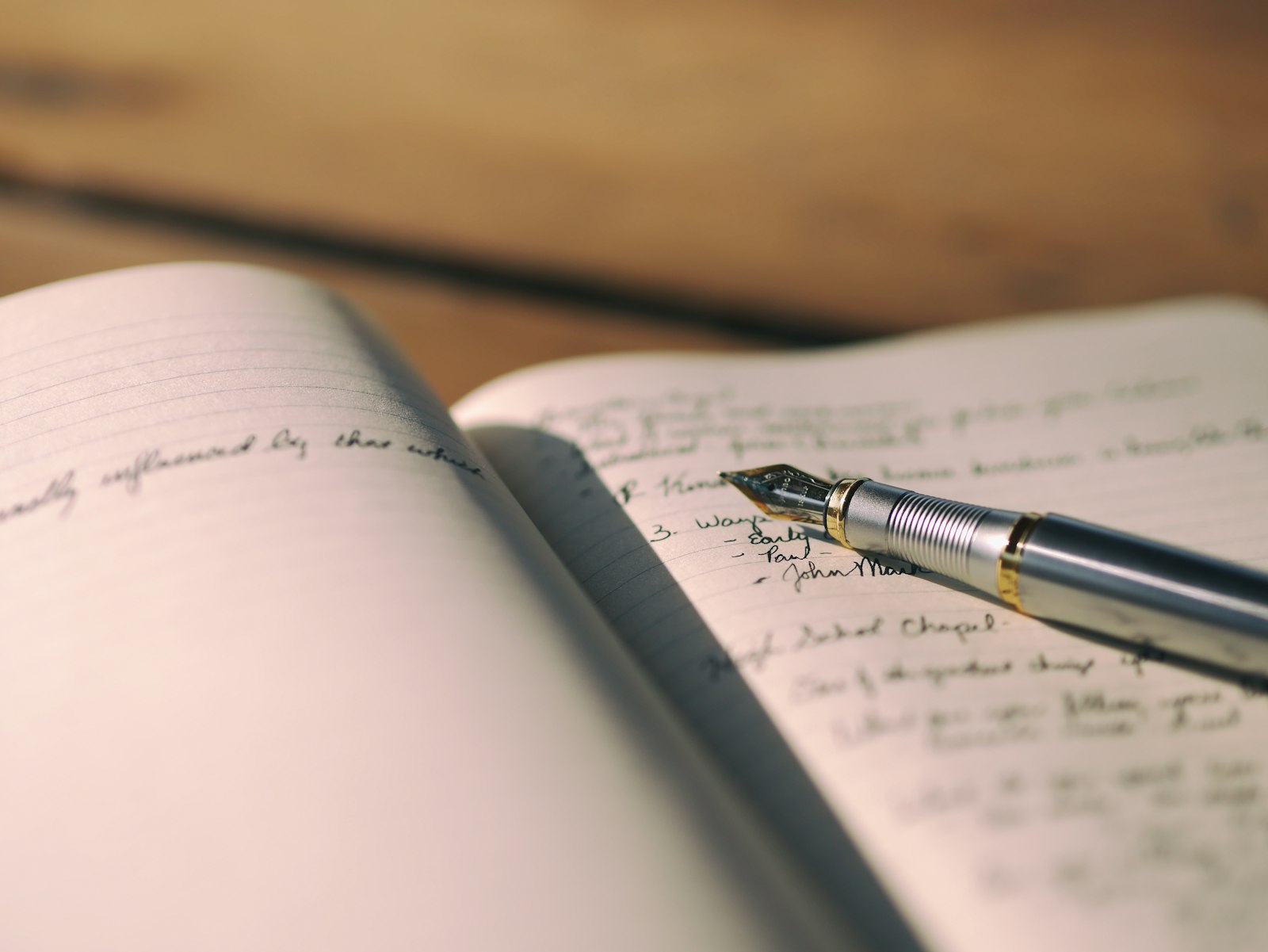
The sentence does not want to be clever. The ones that have lasted best in our own log are flat and particular: I keep stopping to look at the ceiling after her paragraphs. This is the first history book that has made me want to draw the map myself. The dialogue is good; the author does not like his main character and it is beginning to show. A reader five years later knows at once what sort of evening this was, which no star could tell them. The habit sits close to the one described in Writing a book note while it's fresh, and a long note can grow out of such a sentence later; the log entry is just the seed you need not to lose.
Keep the system boring
The log you will still use in five years is the one that can be filled in without opening anything. A plain notebook on the same shelf as the books is perfect. A single text file, one entry per line, is perfect. A ruled index card per book, kept in a small drawer, is more than perfect. What they share is that no part of the ritual takes longer than closing the book itself.
Resist, for as long as you can, the urge to upgrade. Every new database, every new app, every migration from one system to the next is a chance to lose entries and an excuse to spend an evening on the form instead of on the reading. The log is not a hobby. A commonplace book, as described in Keeping a commonplace book, is a different object with a different ambition; if you want one, keep it alongside and do not try to make the log do both jobs.
One small rule helps more than any software. Write the entry before you shelve the book. The thirty seconds between the last page and the return to the shelf is the only window in which the sentence will cost you nothing. An hour later it is already a chore; a week later it is a lie.
Going back
A reading log that is never reread is only a tidier shelf. Give yourself two small appointments with it. Once a year, in a quiet week, read the whole year through at a sitting. You will notice patterns you did not know you had, titles you have already forgotten, and a handful of books you want to go back to.
Then, on the night a friend asks what you have been reading, or a stranger's margin sends you looking, open the log for the answer. That is the moment it earns its keep. Five years in, an entry you nearly did not bother to write will give you back a whole evening you thought was gone, and with it the person you were when you read the book.
If any of this is useful and you would like the house template we start readers with, the help desk keeps a plain one. Take what works and leave the rest. The log is yours, and its only real reader is you, later on, in a year you cannot yet picture.
Subject headings
Filed by
The house shelf of SlipRoom, kept by the editors who look after the room: essays and working notes on keeping a slip-box, reading slowly and seeing a draft through to the end.


Margin notesComments
The margins are still blank. Yours may be the first note here.