Slip2026·10·21
Reading slowly, on purpose

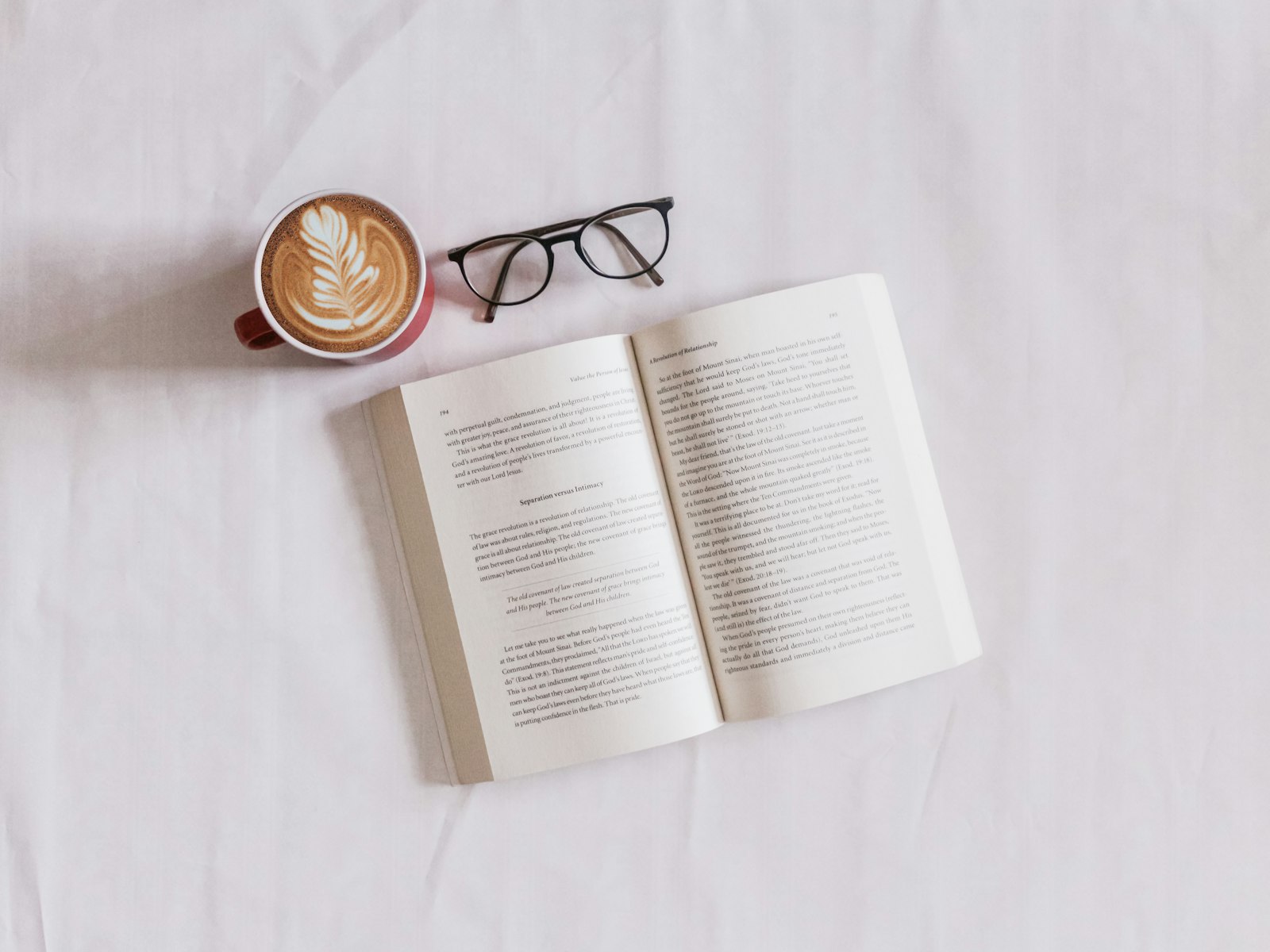
Reading slowly is not a virtue in itself. Some books want to be read fast, in a weekend, with the phone in another room and the plot pulling you forward. But there is a kind of reading that only works slowly: the essay you want to argue with, the poem you half understand, the chapter you suspect will change how you think about your own work. For those, speed is a way of not quite reading at all.
What follows is a handful of habits that make slow reading easier to sustain. None of them requires special equipment, and none of them is a rule. Take the ones that help.
Know why you are slowing down
It helps to decide, before you begin, what kind of reading this is. Are you reading to understand an argument well enough to explain it to someone else? To learn how a writer you admire builds a paragraph? To find out whether a book is worth your time at all? Each of these asks for a different pace, and a different kind of attention.
A useful habit is to write the purpose down in a line at the top of a blank page or on the inside cover: “Reading for how she handles time.” “Reading to see if the central claim holds.” When your attention drifts, and it will, that line tells you what to come back to.
Read with a pencil
The simplest way to slow down is to give your hand something to do. A pencil in the margin turns reading from something that happens to you into something you do. You do not need an elaborate code; a few marks used consistently are enough. We like three:
- A vertical line beside a passage that matters to the argument.
- A question mark where you are confused, or where you disagree but cannot yet say why.
- A small star where a sentence is simply well made, and you want to come back and see how.
Write a word or two beside the mark if you can. “Contradicts p. 40.” “Too neat.” “Same move as the opening.” These short notes in the margin are the raw material for everything that comes later, and they cost almost nothing at the time.
If the book is borrowed, or you cannot bear to mark it, keep a thin slip of paper as a bookmark and write on that instead, with page numbers.
Pause at the end of each section
The most effective slow-reading habit we know is also the most easily skipped. When you reach the end of a section or a chapter, stop. Close the book. Try to say, in one or two sentences, what that part was doing.
Not what it was about; what it was doing. “Setting up the objection she will answer later.” “Giving three examples that all turn out to be the same example.” “Changing the subject so quietly I almost missed it.” If you cannot say it, open the book and look again. This takes a minute or two each time, and it is where most of the understanding happens.
Over a long book, these small summaries become a map. Write them down and you have something close to an outline of the argument, in your own words, which is worth more than any number of highlights.
Reread the parts that resist
Slow reading is often really rereading. The first pass tells you the shape of the thing; the second tells you how it works. You rarely need to reread a whole book. Go back to the passages you marked with a question mark and read them again, more slowly, with the rest of the book now in your head.
Very often the confusion has cleared on its own, because the writer explained it later. Sometimes it has deepened, and that is worth noticing too. A passage that still resists after a second reading is usually either badly written or doing something genuinely difficult. Learning to tell those two apart is one of the quiet skills a reader builds over years.
Write notes afterwards, not during
It is tempting to take full notes as you read. We would suggest waiting. Notes taken during reading tend to be transcription: you copy what the writer said because it seems important in the moment. Notes taken a day or two later, from your margin marks and section summaries, are filtered by memory. What survives the gap is usually what mattered.
When you do sit down to write notes, write them as separate ideas in your own words, each with a page reference. That is the habit described in Keeping a slip-box: one idea to a card, and slow reading and a slip-box feed each other well. The first gives you better material; the second gives that material somewhere to go.
Slow reading on a screen
Much of what we read now arrives on a screen, and screens are built for skimming. A few small choices help:
- Read in one place, at one time. Collect pieces you want to read properly and set aside a time for them, rather than reading them the moment they appear.
- Use a feed reader for the writers you follow. It gathers their new work into a quiet list with nothing competing for your eye. Every writer’s shelf here has an RSS feed at
/their-handle/feed.xml; the help desk explains how to follow one. - Keep a paper slip beside you for margin notes, since screens make marking awkward. Write the title at the top and your notes below.
- Finish before you comment. If you want to reply to a writer, read to the end, sleep on it, and then write. A comment that responds to the whole piece is worth more to the writer than three that respond to the first paragraph.
None of this makes reading quicker. That is rather the point. A book read slowly once tends to stay with you longer than one read quickly twice, and the time spent is not lost: it comes back, later, as something you understand well enough to use.
Subject headings
Filed by
The house shelf of SlipRoom, kept by the editors who look after the room: essays and working notes on keeping a slip-box, reading slowly and seeing a draft through to the end.

Margin notesComments
The margins are still blank. Yours may be the first note here.